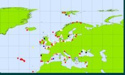
The transition from a free-living lifestyle to endosymbiosis represents a large evolutionary shift, impacting various aspects of any organism's biology, including its molecular-genetic groundwork. So far, it has been impossible to generalise the impact this lifestyle shift has on genomic architecture. This study explores this phenomenon using a new model system: neodalyellid flatworms (Rhabdocoela), a diverse assemblage of free-living and independently evolved endosymbiotic lineages. A uniquely comprehensive mitochondrial genomic dataset, consisting of 50 complete or partial mitogenome sequences (47 of which are new to science), is constructed, increasing the genomic resources available for rhabdocoel flatworms over tenfold. A robust phylogenomic framework is built, enabling an in-depth exploration of the molecular-genetic signatures associated with evolutionary shifts towards endosymbiosis. To understand speciation influenced by host phylogeny, first steps are taken to unravel the host-switching history of the largest endosymbiotic group of neodalyellids. We test several hypotheses regarding the potential consequences of a symbiotic lifestyle and find marginally heightened AT content, more pronounced GC skew and relaxed selection on specific protein-coding genes in endosymbionts compared to their free-living counterparts. Numerous substitutions have accumulated in certain endosymbiotic lineages; however, the correlation with lifestyle remains uncertain. A high frequency of genetic rearrangements across all studied lineages is observed. Our findings affirm the variable nature of rhabdocoel mitogenomes and, for the first time, reveal distinct signatures of an endosymbiotic lifestyle in neodalyellid flatworms. This effort lays the groundwork for future research into the evolutionary and genomic consequences of a symbiotic lifestyle in this and other animal systems.
All data in the Integrated Marine Information System (IMIS) is subject to the VLIZ privacy policy