drivers of diversification; glacial-interglacial cycles; Island fusion-fission cycles; marine island biogeography; Moliones islands; sea-level oscillations; Solum islands; Soror islands
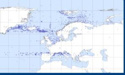
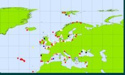
This study extends the Sea-Level Sensitive dynamic model of marine island biogeography by integrating the dynamics of fusion-fission islands during glacial-interglacial cycles with marine island biogeography theory. We discuss the variations in littoral area due to Pleistocene sea-level changes and their effect on the evolutionary rates of splitting, extinction, and merging of populations, as well as on the speciation rates of marine shallow-water organisms. Here, we introduce three different types of fusion-fission islands: Solum islands, i.e., islands that have never been merged with neighbouring islands (at depths shallower than 50 m) during sea-level low stands associated with glacial episodes; Soror islands, i.e., islands that are subjected to fusion-fission cycles due to sea-level changes and thus may be functionally connected or separated depending on the amplitude of sea level changes; and Moliones islands, where two or more islands are functionally connected from a marine point of view, as the seafloor depth separating them is always shallower than 50 m, regardless of sea level. For this study, we selected 324 islands located in temperate and tropical climates, and representative of a broad geographic distribution, which were classified accordingly: 50 Solum islands, 77 islands making up 20 groups of Soror islands, and 197 islands from 34 groups of Moliones islands. Sea-level variation during glacial-interglacial cycles induced changes in the insular littoral area (ILA), resulting in five general types of curves of ILA change herein described. These ILA curves depend on the depth distribution across the shelves, which, in turn, depends on several variables, including the age of the island, the tectonic setting, the presence of submarine and subaerial terraces, and also on the presence/absence of coral reefs. Finally, we provide several predictions on the frequencies of marine population splitting, extinction, and merging events, as well as on the speciation rates of shallow-water marine organisms, according to the respective island types.
All data in the Integrated Marine Information System (IMIS) is subject to the VLIZ privacy policy